


Executive Summary
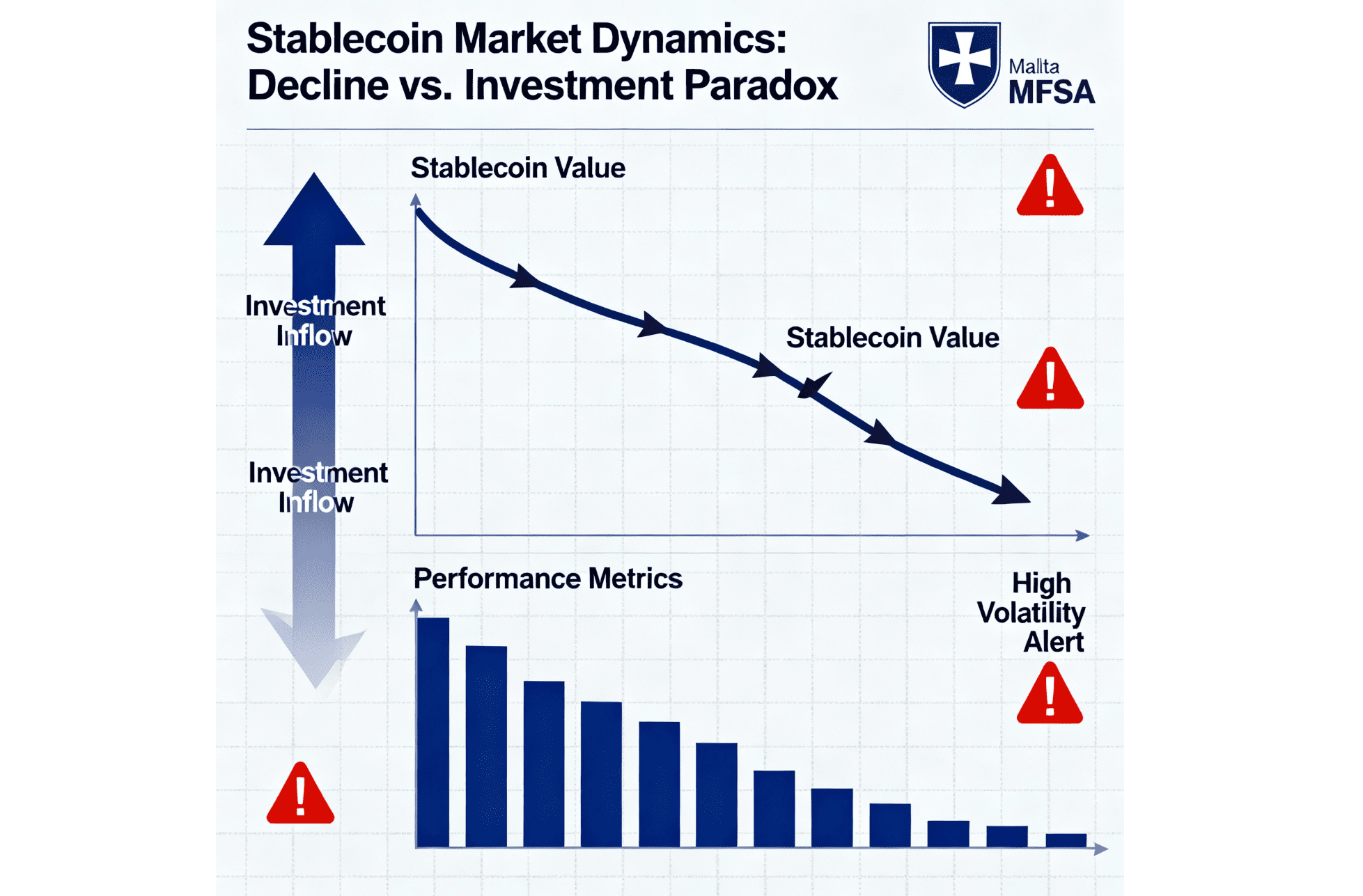
Despite announcing strategic investments from industry giants Tether (December 2024) and Kraken (July 2025), StablR‘s stablecoin issuance has not only failed to grow but has actually declined during Q3 2025 – the same quarter Kraken announced its investment. This counterintuitive outcome reveals critical structural challenges facing small stablecoin issuers and provides a template for analyzing similar operations across the sector.
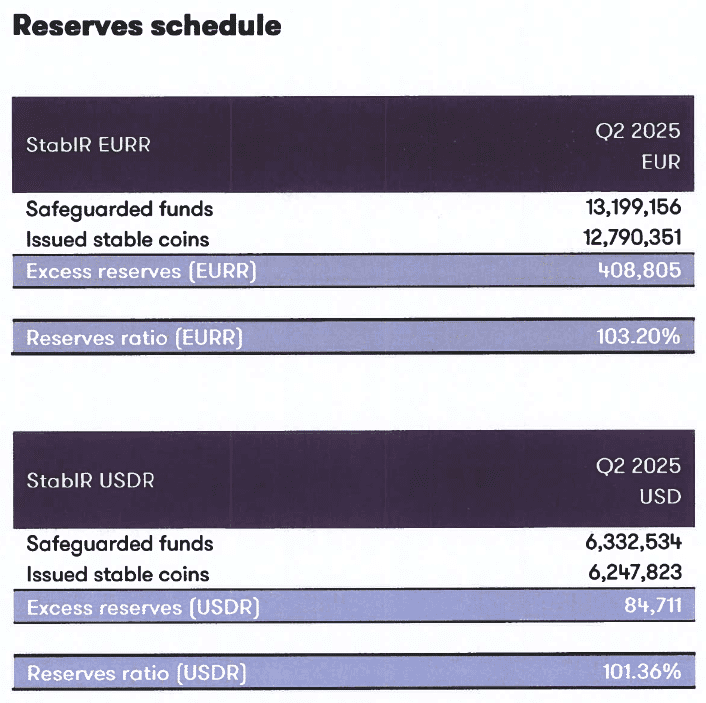
Our quantitative analysis reveals that StablR requires €24 million in reserves at current ECB rates merely to achieve operational breakeven, while maintaining only €22 million. More concerning, the company’s reserves and token circulation decreased following major partnership announcements, suggesting fundamental business model dysfunction.
Key Financial Metrics Summary
| Metric | Q2 2025 | Sept 2025 | Change | Breakeven Required |
|---|---|---|---|---|
| EUR Reserves | €13.2M | €11.0M | -16.7% | €24.0M |
| EURR Issued | €12.8M | €11.0M | -14.1% | €24.0M |
| USD Reserves | ~€11.0M | €11.0M | Flat | €24.0M |
| Total Reserves | €24.2M | €22.0M | -9.1% | €48.0M |
| Est. Annual Revenue | €715K | €715K | Flat | €780K+ |
| Operating Deficit | €65K | €65K | Unsustainable | Break-even |
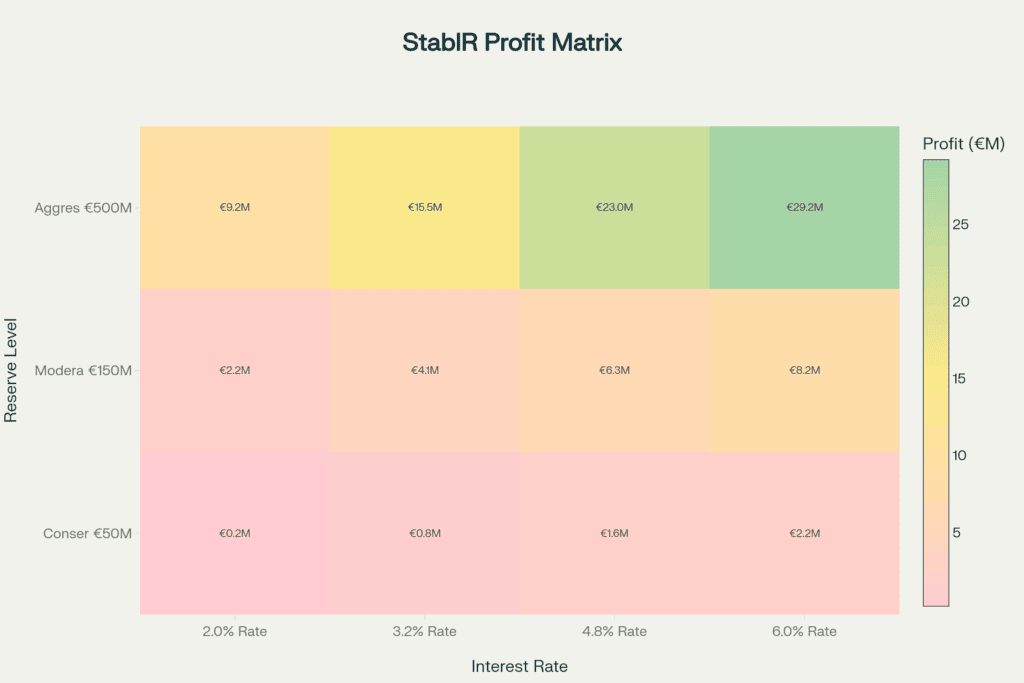
StablR Business Model Viability Analysis: Current Position vs Growth Scenarios
Scenario Analysis: The Path to Viability
Scenario 1: Conservative Growth (€50M Reserves)
Likelihood: Moderate | Timeline: 12-24 months
This scenario assumes StablR achieves modest market penetration and captures a small portion of EU stablecoin demand:
- Required Growth: 2.3x current reserves
- Profitability: €220K-€2.2M annually depending on interest rates
- Key Dependencies: Successful Turkey market expansion, improved exchange adoption
- Risk Factors: Competition from Circle’s EURC, regulatory headwinds from Payvision connections
Scenario 2: Moderate Growth (€150M Reserves)
Likelihood: Low | Timeline: 2-3 years
This requires StablR to become a significant player in European stablecoin markets:
- Required Growth: 6.8x current reserves
- Profitability: €2.2M-€8.2M annually
- Key Dependencies: Major institutional adoption, successful cross-border payment partnerships
- Risk Factors: Established competitor dominance, management reputation issues
Scenario 3: Aggressive Growth (€500M Reserves)
Likelihood: Very Low | Timeline: 3-5 years
This would position StablR as a major European stablecoin issuer:
- Required Growth: 22.7x current reserves
- Profitability: €9.2M-€29.2M annually
- Key Dependencies: Market disruption, regulatory preference for EU-based issuers
- Risk Factors: Winner-take-all market dynamics, technical/operational scaling challenges
The Investment Paradox: Analyzing the Kraken-Tether Disconnect
The Announcement vs. Reality Gap
StablR‘s July 2025 announcement of Kraken‘s strategic investment emphasized remarkable growth metrics:
- “€3 billion in transaction volume” in H1 2025
- “50+ major exchange listings”
- “150 trading pairs supported”
- “Rapidly expanded” since launching six months prior
However, the proof-of-reserves data tells a starkly different story. Rather than growth acceleration following Kraken’s investment, Q3 2025 witnessed:
- 16.7% decline in EUR reserves
- 14.1% reduction in EURR token circulation
- 9.1% decrease in total reserves
Possible Explanations for the Paradox
- Strategic Investments Were Overstated: The partnerships may involve technical collaboration, small equity stakes, or future commitments rather than immediate capital injection for growth.
- Market Rejection Despite Partnerships: Even with major backing, StablR may face adoption barriers due to management reputation (Payvision connections), competitive disadvantages, or product-market fit issues.
- Deliberate Reserve Management: The company may be intentionally managing reserves down while building alternative revenue streams or preparing for regulatory changes.
- Hidden Operational Issues: Undisclosed technical problems, compliance challenges, or internal management conflicts may be impeding growth despite external support.
Broader Implications for Small Stablecoin Issuers
The Structural Challenge Framework
Our analysis establishes a framework for evaluating small stablecoin issuer viability:
Critical Success Factors:
- Scale Threshold: Minimum €25-50M reserves for operational sustainability
- Interest Rate Sensitivity: 2-3x revenue impact across normal rate cycles
- Partnership Effectiveness: Strategic relationships must translate to measurable adoption
- Regulatory Positioning: MiCA compliance provides differentiation but increases costs
Red Flag Indicators:
- Stagnant or declining reserves post-investment announcements
- High transaction volume claims without corresponding reserve growth
- Management connections to previous financial scandals
- Lack of transparent guidance or growth projections
The Stablecoin Bubble Risk Assessment
The disconnect between StablR’s partnership announcements and actual business performance reflects broader concerns about a potential stablecoin sector bubble:
- Valuation Inflation: Strategic investment announcements may create artificial market confidence
- Competition Compression: Winner-take-all dynamics favor established issuers with massive scale advantages
- Regulatory Arbitrage Limitations: MiCA compliance alone insufficient for competitive differentiation
- Interest Rate Dependency: Sector profitability tied to monetary policy cycles beyond issuer control
Most Likely Scenario: Managed Decline or Acquisition
Hypothesis: StablR will either voluntarily wind down operations within 12-18 months or be acquired by a larger player seeking EU regulatory infrastructure.
Supporting Evidence:
- Mathematical impossibility of sustainable operations at current scale
- Declining reserves despite major partnership announcements
- Management reputational risks creating ongoing regulatory scrutiny
- Established competitors (Circle, Tether) with insurmountable scale advantages
Alternative Outcomes:
- Pivot to B2B Services: Focus on payment processing, treasury management for crypto businesses
- Regulatory Asset Sale: License and infrastructure acquisition by major financial institution
- Merge with Competitor: Consolidation with another small EU stablecoin issuer
Regulatory and Systemic Risk Implications
The StablR case demonstrates why regulators consider stablecoins systemically important. Small issuers operating at sub-scale levels pose multiple risks:
- Consumer Protection: Token holders face potential total loss if the issuer becomes insolvent
- Market Integrity: Misleading growth narratives may distort market expectations
- Regulatory Credibility: EMI license failures could undermine MiCA framework legitimacy
- Financial Stability: Concentrated failure risk if multiple small issuers face similar challenges
Call for Insider Information
FinTelegram urgently seeks insider information regarding StablR’s operations through our secure whistleblower platform Whistle42.com.
Priority Intelligence Requirements:
- Financial Performance: Internal P&L statements, cash flow projections, actual operational costs
- Partnership Details: True nature and terms of Tether/Kraken investments and ongoing relationships
- Strategic Planning: Management discussions regarding business model sustainability and exit strategies
- Operational Issues: Technical problems, compliance challenges, or regulatory correspondence
- Turkey Operations: Specific details of Turkish market strategy and performance metrics
- Reserve Management: Investment strategies, yield optimization, and custodial arrangements
Protected Disclosures: Information regarding potential investor fraud, misleading public statements, regulatory violations, or connections to previous financial crimes will be handled with strict confidentiality protections.
Submit Confidentially: Visit Whistle42.com to securely provide information that protects the public interest and ensures market integrity in the evolving stablecoin sector.