

ICIJ’s new Coin Laundry investigation confirms what FinTelegram has warned for years: the world’s largest crypto exchanges have been awash with funds tied to money launderers, scam cartels, drug syndicates, and North Korean hackers – even after guilty pleas in the U.S. The industry’s “compliance theatre” increasingly looks like a business model.
Key Facts
- ICIJ traced tens of thousands of transactions and found major exchanges, including Binance, OKX, Kraken, HTX, and Coinbase, processing billions linked to crime networks and sanctioned actors (Source: icij.org).
- Cambodia-based Huione Group, designated a money-laundering concern by the U.S. Treasury, sent at least $408 million in tether to Binance and $226 million to OKX in the year after their U.S. plea deals for AML violations (Source: Axios).
- Wallets linked to the Sinaloa cartel, Chinese fentanyl traffickers and Russian launderers for North Korea’s weapons program all used brand-name exchanges to move funds.
- North Korean hackers routed about $1.5 billion stolen from the Bybit exchange through THORChain; a $900 million ether surge then hit a handful of Binance deposit addresses.
- Sources describe overwhelmed compliance teams and a fragmented supervisory regime that still treats systemically important exchanges more like money transmitters than banks, despite their trillions in annual trading volume.
Compliance Analysis
The Coin Laundry is not a story about a few rogue wallets; it is an indictment of an ecosystem. Binance, OKX and others emerge as central pipes in a global shadow banking system where dirty tether and bitcoin are routinely washed into “clean” fiat – long after regulators claimed victory with multi-billion-dollar settlements and court-supervised monitors (Source: Wikipedia).
The Huione flows are particularly explosive: a human-trafficking-linked payments hub pushing roughly $1 million a day in stablecoins into customer accounts at exchanges that were supposedly under enhanced scrutiny. This is not residual legacy risk; it looks like business-as-usual revenue being quietly tolerated because it generates fees – until journalists connect the dots.
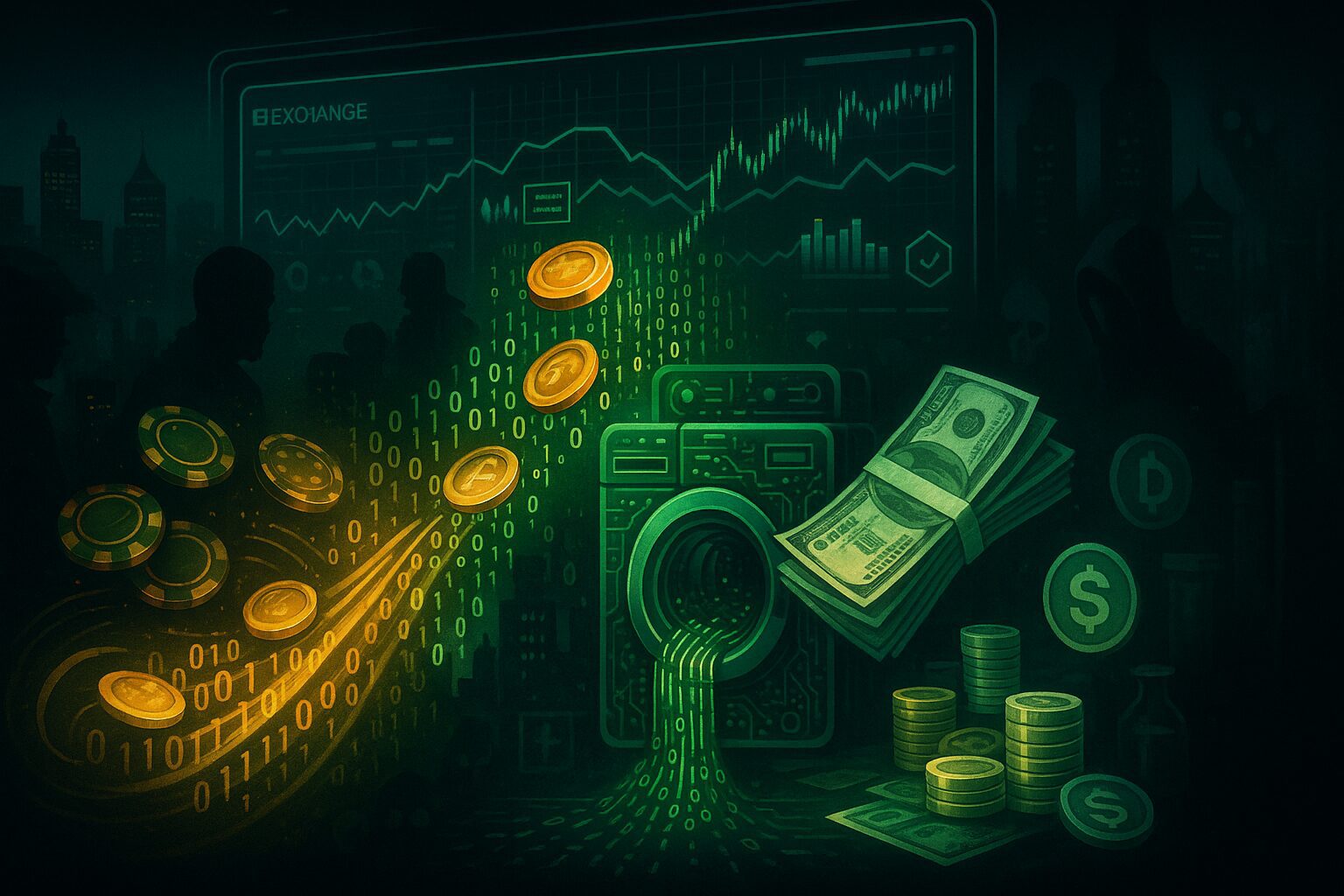
FinTelegram’s own investigations over recent years point to the same structural weakness: illegal online casinos, unlicensed sportsbooks and high-risk CFD/FX schemes systematically route player deposits and victim funds through crypto payment processors and exchanges to break the audit trail. The very same rails highlighted by ICIJ for scam compounds, drug cartels and state-sponsored hackers are also used to launder gambling and online-trading proceeds at scale. Crypto is no longer just the getaway car for darknet markets – it has become the cashier cage for the global grey gambling and online-trading industry.
Regulators come off badly. Europe’s new consumer-protection and transparency rules arrived late and narrow; in the U.S., enforcement has swung between aggressive crackdowns and abrupt political U-turns, while under-resourced supervisors struggle to police exchanges classified as mere “money transmitters.” At the same time, blockchain analytics firms posture themselves as watchdogs, but, as the ICIJ notes, often avoid publicly naming the big platforms that pay their invoices.
Call for Information – Whistle42
FinTelegram will continue to follow the Coin Laundry trail, with a special focus on illegal gambling, offshore brokers, and their crypto payment facilitators. We call on insiders, compliance officers, ex-employees of exchanges and payment processors, and affected players to share documents and information with us via our secure whistleblower platform Whistle42. Help us map – and expose – the crypto money-laundering infrastructure before the next wave of victims pays the price.